Agency Immersive 3D website
Immersive 3D website
A product, a place or a story people turn, open and walk through themselves, computed live in the browser.
Demonstration: Morion’s watch in 3D, to turn, take apart and restyle
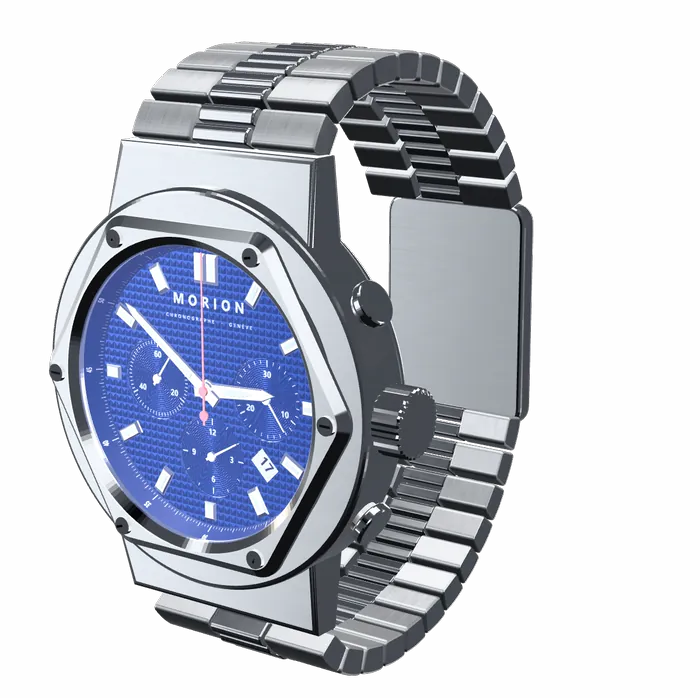
Try it: drag the watch to turn it
Morion’s watch, from a demo site built by WIZIYO (fictional brand), computed live by your browser. See Morion
Turn
Visitors pick their own angle: every side can be seen, without one more photo.
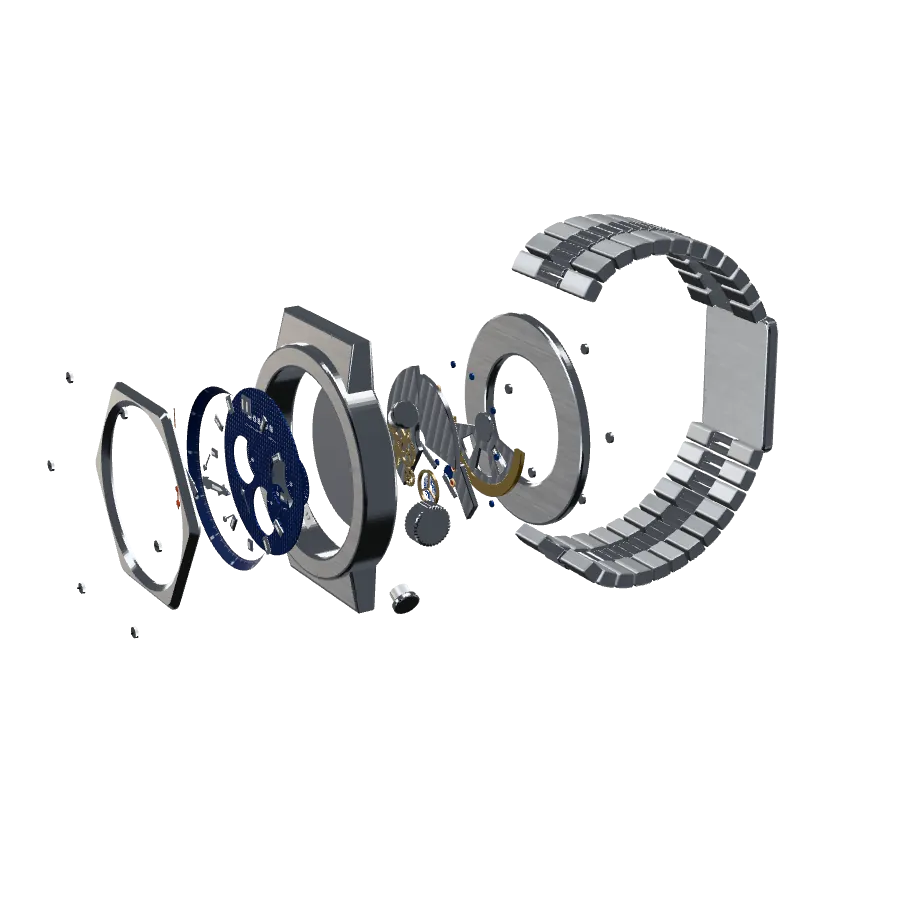
Take apart
What is never seen becomes clear: the inside, the assembly, the craft.
Change the material
The finish changes on the object itself, under the same light, instead of on another photo.
And for your project?
The same technique serves other subjects. Three uses, each shown on a demo site built by WIZIYO (fictional brands).
-
A product
Your product, which customers turn, open and configure themselves before choosing it: a watch, a piece of furniture, a machine, a package.
Morion: the watch you have just taken apart, with its four finishes. See Morion
-
A story told on scroll
A launch, a craft, a workshop tour: the story moves forward as people scroll, shot by shot, and everyone reads it at their own pace.
Velocia: as you scroll, the wind tunnel picks up around the car, then it is shown see-through. See Velocia
-
A place, a journey
A hotel, a villa, a trip: people step inside before they come, at their own pace, on computer and phone alike.
SkyElite: you pass the window, then the plane climbs through the clouds, as you scroll. See SkyElite
The service, in detail
An immersive 3D website places visitors inside a three-dimensional scene, calculated live by their browser, or inside a film that follows their scrolling. WIZIYO designs these sites in Verviers, for companies in Wallonia and across Belgium. The text stays in HTML: Google reads it, and a device without 3D displays it.
- Family
- Stage
- Area
- Verviers, Liège, Wallonia, all of Belgium
- Your contact
- Mohammad Salimi
- Updated
Who is it for?
For a company whose product, place or world is worth seeing before reading about:
- a product that visitors turn and configure themselves, from every angle;
- a place to tour before the visit: a villa, a hotel, an exhibition space;
- a brand that tells its story shot by shot, at the pace of scrolling.
A 3D website does not replace a clear one. If your visitors first look for opening hours, a price or a phone number, a simple page answers them faster: we tell you so from the first conversation.
What you receive
- The scene or film of your product, your place or your brand: 3D calculated live (Three.js, WebGL) or scroll-driven video, whichever serves the purpose.
- The text in HTML: headings, paragraphs and links can be read without the 3D, by Google and by AI assistants alike.
- A simple version, without 3D, for devices that cannot display it, and reduced animation for anyone who asks for it in their device settings.
- Before launch, the measurements: time to enter the scene, frames per second, page weight, on computer and phone.
- The site’s code and your access, on delivery.
The steps
Understand What the scene must show, to whom, and what must stay readable without it.
Design A mock-up of the main screen, to open in your browser. Nothing is built before you approve it.
Build The site is built at a private address that you can open.
Test In real browsers, on computer and phone: speed, smoothness, reading without the 3D.
Deliver Launch once you agree in writing, then handover of the code and access.
Each step in detail: the method.
What it asks of you
- What you want to show: the product, its photos and dimensions, or its 3D file if one exists; for a place, its plans and photos.
- Your texts, or the information to write them.
- One person who decides: they approve the direction, then each screen.
- Access to your domain name, when the site goes live.
Frequently asked questions
Is a 3D website slow?
It weighs more than a brochure website: the scene, its materials and its library must arrive before entry. We measure that entry time before launch, on computer and phone, and whatever the first image does not need arrives afterwards.
Does it work on phones?
Yes, with staging designed for the narrow screen, not just shrunk. The resolution of the scene adapts to the power of the device, and a device that cannot display 3D receives a simple version with the same content.
Does Google read a 3D website?
Google reads the text: that is why it stays in HTML, with the scene added on top. We check every page with a render without WebGL, like a crawler’s: headings, paragraphs and links must be readable there. The page you are reading is an example.
Do I already need a 3D model of my product?
No. An existing design or CAD file can be prepared for the web. Without a file, we discuss it in the quote: modelling the object, or choosing staging that does not need one, such as a scroll-driven film.
How much does a 3D website cost?
We do not publish prices: it depends on what the scene has to show. What makes it vary: the number of scenes or shots, live 3D or film, whether a 3D file exists, the number of pages and languages. Describe your project: you receive a reply within one working day, with no commitment.
Your project
Describe what you want to show
A product to show from every angle, a place to tour, a story to unfold: tell us which.
The request will open with:
Add or change a service
Describe my 3D project Book a 20-minute call
Reply within one working day No commitment